
Service
Bioactivity testing for recombinant proteins
We measure the biological activity of recombinant proteins in cell-based and enzymatic assays: dose-response series with EC50, ED50 or IC50 where appropriate, lot comparisons, and investigations of lots that underperformed. If no suitable assay exists, we develop one. You send the protein and the question; we return the data, methods and interpretation.
Who it’s for
When to send a protein for testing
Proteins made in your own lab, bought from another supplier, or produced by Dapcel can all be tested. Typical reasons include:
- You need the biological activity of a protein measured before using it
- You’re comparing lots or sources under the same conditions
- A lot underperformed and you need to know why
- No standard assay exists for your protein yet
- You need documented methods, controls and results for reviewers, QA or a partner
Data from our products
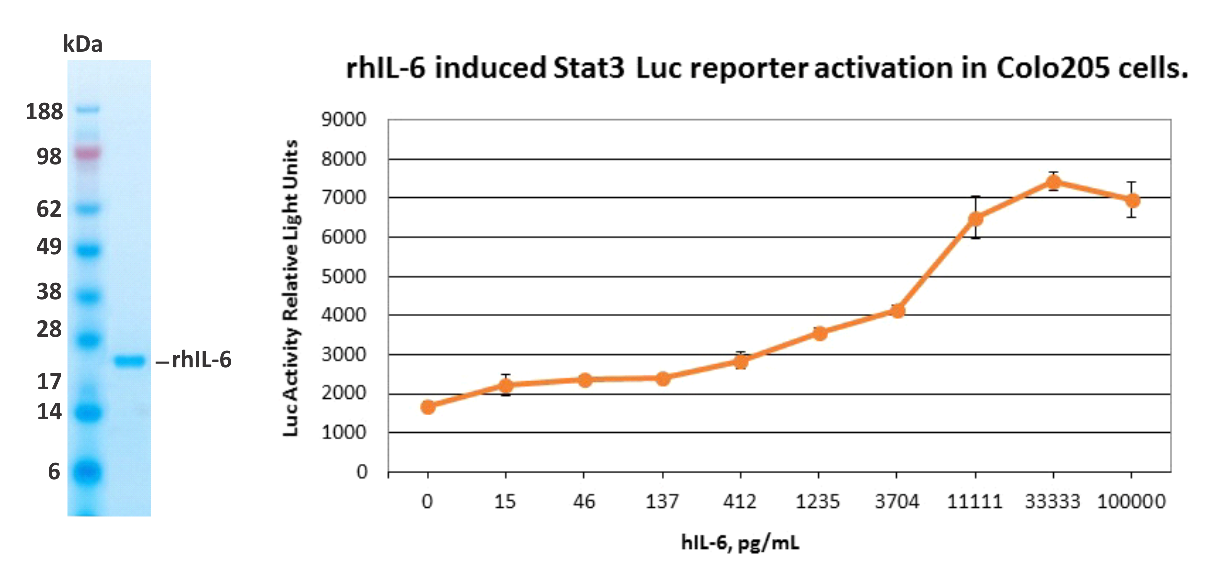
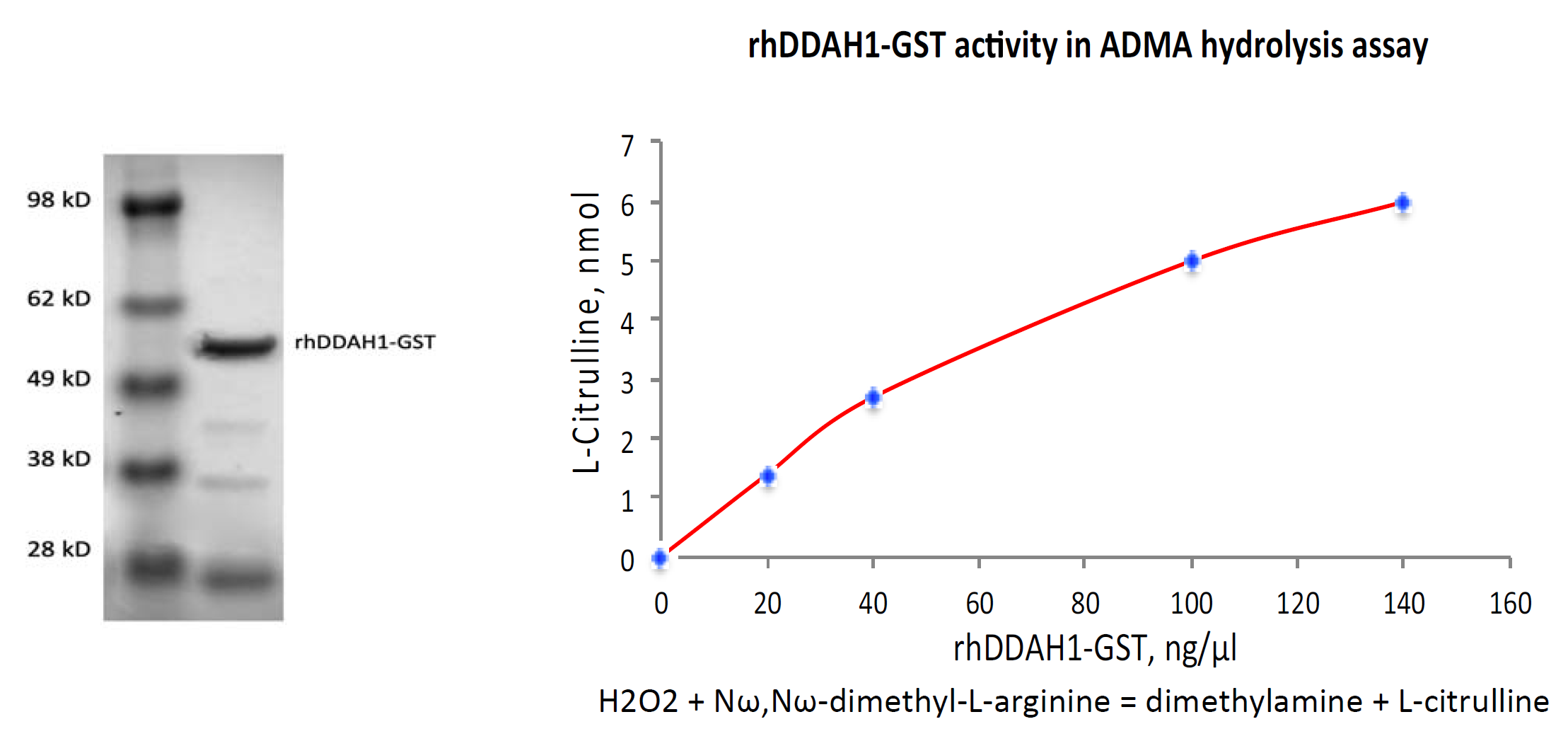
Our gene design helps proteins fold correctly during expression, so they come out soluble and active. Here are four of our catalog proteins, each tested in a functional assay; the figures come from their datasheets.


How the testing is arranged
We test customer-supplied proteins regardless of who produced them. Before any work starts, we agree with you on the assay conditions.
Where possible, your protein runs alongside a reference material under matched conditions: your own reference standard, an earlier lot, or another material we agree on. The report lists the reference and controls used, so the result can be checked against them.
If you have acceptance criteria, the report states the result against them. Otherwise it reports the measured values and what they mean. When no suitable assay exists, we develop one and define its controls and conditions; see assay capabilities.
What a bioactivity result covers
A result describes activity in the defined assay, under the stated conditions. It is not a claim about every biological context or about clinical relevance. The report gives the conditions, controls and reference used, and notes which questions would need a different experiment.
Testing options
Activity testing
Test one protein sample
One protein sample in a defined assay, with a dose-response curve, reference and controls, and a short report. A pass/fail call is made only against criteria agreed in advance.
Request a quoteLot-to-lot comparison
Rank 2–3 lots
Two or three lots tested against each other or a reference under matched conditions.
About lot comparisonFailed-lot investigation
Find the cause of a weak result
Determine whether a weak or absent response is related to the material, formulation, handling or assay.
About failed-lot investigationAssay development
Build a method
A cell-based assay developed for your protein, with defined controls and conditions.
Assay capabilitiesAssay capabilities
Documented examples come from the characterization of Dapcel catalog products and from customer feedback.
| Assay format | What it measures | Documented example |
|---|---|---|
| Reporter-gene signaling assays | Pathway activation read out through a luciferase reporter; EC50 or ED50 from a dose-response series |
Oncostatin M: Stat3 luciferase reporter in U87 glioblastoma cells, ED50 2.5–3 ng/mL. IL-6: Stat3 activation in the Colo205-STAT3-luc reporter line, ED50 4 ng/mL. |
| Cell proliferation, survival and growth-inhibition assays | Change in cell growth or viability in response to a protein | TGF-β1: growth inhibition of HT-2 cells. |
| Enzymatic and biochemical activity assays | Product formed per unit time; specific activity, e.g. pmol/min/µg | DDAH1: ADMA hydrolysis measured as L-citrulline formed, >50 pmol/min/µg. |
| Custom assay development and optimization | A method built for your protein, with defined controls and conditions | Customer feedback: the QA manager at PeproTech, Inc. (now part of Thermo Fisher Scientific) describes Dapcel staff working with the client to define the best assay for its cytokine products (full comment). |
Other assay formats we run
- Cellular differentiation assays
- Lineage or phenotype change driven by a differentiation factor
- Cell adhesion assays
- Attachment and organization on defined substrates
- Chemotaxis and migration assays
- Directed cell movement toward a stimulus
- Neutralization and inhibition assays
- Blockade of a ligand or its receptor; IC50 where determined
- Receptor-dependent functional assays
- Responses that require a specific receptor
- ELISA and cytokine-release measurements
- Secreted or captured analytes, as a supporting readout
Protein families we have tested include cytokines and immune regulators, TNF-superfamily ligands, Wnt-pathway agonists and differentiation factors, neurotrophic factors, angiogenic proteins, myeloid growth factors and complement-associated inflammatory mediators. Ask about a specific protein.
What a Dapcel assay reports
The values reported depend on the assay. These terms are not interchangeable.
- Dose-response curve
- The response measured across a concentration series of the protein, fitted to a curve where the data allow.
- EC50
- The concentration that produces half of the maximum response in the assay.
- ED50
- The effective dose producing a half-maximal response; the term used in our product specifications, such as 2.5–3 ng/mL for Oncostatin M.
- IC50
- The concentration that inhibits a response by half, used for inhibitors, neutralizing proteins and growth-inhibition readouts.
- Maximum response
- The plateau signal, reported separately from potency because two samples can have similar EC50 values and different maximum signals.
- Enzymatic rate
- Product formed per unit time per amount of enzyme, reported as specific activity; for DDAH1, >50 pmol/min/µg in the ADMA-hydrolysis assay.
- Conditions and controls
- The cell system, reference material, controls and assay conditions, reported with every result.
How a bioactivity project runs
Define the question
We agree on the question the results need to answer, the assay and endpoints, and the controls.
Prepare sample and controls
Your protein sample, the reference and the controls are set up under matched, documented conditions.
Run the dose-response
Cell-based (or enzymatic) assay across a concentration series.
Interpret and report
Curves, EC50/ED50/IC50 where appropriate, assay conditions and a written interpretation.
What you send and what you get back
What you send
- The protein: name, source, format or tag
- Concentration and amount available
- Reference material or a known assay, if any
- Prior results, if available
- The question the results need to answer
What you get back
- Dose-response data and curves
- EC50, ED50 or IC50 where appropriate, or an enzymatic rate
- Assay conditions and the reference and controls used
- Interpretation: what the data show and what they do not
- A report with methods, controls, results and interpretation
Customer feedback
DAPCEL, Inc. is a highly professional biotech company that offers quality biological testing. We have used DAPCEL for confirming biological activity for a number of our cytokine products. Their highly trained staff works with the client in researching and defining the best assay for the product. We rely on DAPCEL’s quality bioassays, quick turn around time, and comprehensive reports.
Karen A. Fenimore-Pirog Quality Assurance Manager, PeproTech, Inc. (now part of Thermo Fisher Scientific)
Bioactivity testing FAQ
Do you test proteins you didn’t produce?
Yes. We test customer-supplied proteins regardless of who produced them: your own lab, another supplier or Dapcel.
What do you measure?
Biological activity in a defined assay, usually as a dose-response series. Depending on the assay, the report gives an EC50, ED50 or IC50, the maximum response, or an enzymatic rate. For example, our Oncostatin M is specified at an ED50 of 2.5–3 ng/mL in a Stat3 activation assay, and our DDAH1 at a specific activity of >50 pmol/min/µg in an ADMA-hydrolysis assay. See the example results.
What if there is no established assay for my protein?
We develop a cell-based assay suited to the protein and define its controls and conditions.
Can you compare lots or investigate a lot that failed?
Yes. Lot-to-lot comparison tests two or three lots against each other or a reference under matched conditions. Failed-lot investigation looks at whether a weak or absent response is related to the material, formulation, handling or assay.
What do you need from me to start?
The protein and its details (source, format or tag, concentration, amount), any reference material or known assay, prior results if available, and the question the results need to answer.
Discuss your project
Tell us the protein, the activity you need measured and the question the results need to answer. A scientist reviews your inquiry and replies, typically within one business day.